
Bridging the Workforce Gap: Why Platform Scale and Network Access Define the Future of Immersive Training
The market for technical training and workforce development is undergoing a structural shift. As industries face unprecedented demands for specialized labor—particularly in high-growth infrastructure sectors like cloud computing, advanced manufacturing, and data center operations—traditional recruitment and onboarding pipelines are proving insufficient. To engage next-generation talent before they enter the job market, enterprises are increasingly turning to immersive technology, specifically Virtual Reality (VR), to build high-fidelity career exploration and technical simulations.
This urgent need for skilled labor is nowhere more apparent than in critical, highly technical fields like semiconductor manufacturing and shipbuilding. The microelectronics industry faces a massive talent shortfall as national initiatives drive the construction of new domestic fabrication facilities. Concurrently, the modern shipbuilding sector requires an entirely new generation of technicians skilled in advanced robotics, precision welding, and marine engineering. For both industries, traditional recruitment is bottlenecked by the fact that students cannot easily tour a cleanroom or a secure shipyard. Immersive technology offers a safe, highly scalable way to bring these complex environments directly to the classroom.
However, developing a compelling virtual simulation is only the first phase of a successful workforce initiative. The more formidable hurdle is distribution: ensuring that highly specialized educational content successfully penetrates a fragmented national landscape of K-12 school districts, community colleges, and technical academies.
Analyzing the operational framework of scalable EdTech initiatives reveals three distinct pillars required to successfully bridge the gap between large corporate enterprise needs and real-world student outcomes.
1. Architectural Scalability: Moving Beyond Fragmented Software Development
A primary bottleneck in the immersive training sector is the reliance on traditional, agency-driven software development. When an enterprise hires a standard VR studio, the resulting product is typically a bespoke, hard-coded application. While visually impressive, these siloed software builds present significant operational challenges: they are difficult to update, expensive to modify as real-world technical specifications change, and challenging to deploy across varied hardware ecosystems.
Overcoming these limitations requires an architectural shift toward specialized authoring platforms. Leveraging an environment like HyperSkill allows organizations to deploy complex technical simulations through a unified ecosystem. Whether a simulation requires mimicking the microscopic, precise procedures of a semiconductor cleanroom or the massive, heavy-machinery workflows of a drydock shipyard, a platform-based approach enables rapid scaling, cross-hardware compatibility, and agile content updates. For large enterprises aiming to introduce students to complex technical environments, a structured platform ensures that educational software remains maintainable, compliant, and pedagogically sound over multi-year lifecycles.
2. The Distribution Bottleneck: Why Network Access Trumps Content Creation
In the educational sector, the value of software is fundamentally bounded by its reach. The K-12 and post-secondary landscapes in the United States are deeply decentralized, governed by varying state standards, hardware constraints, and procurement protocols. A typical creative agency or software studio lacks the institutional infrastructure to navigate these networks, frequently leaving high-quality training applications sitting unused on digital shelves.
True impact requires a dual-pronged value proposition: high-tier simulation software coupled with a pre-established, active distribution network. Mapping institutional footprints reveals that successful deployment relies on direct integration with a diverse array of stakeholders, encompassing:
- K-12 Public School Systems and Title I Districts: Reaching early-stage learners in diverse urban and rural settings.
- Career and Technical Education (CTE) Hubs: Connecting directly with students already tracked into vocational and technical career paths—such as precision machining or electronics engineering.
- Higher Education and Community Colleges: Engaging post-secondary students preparing for immediate workforce entry into advanced manufacturing or maritime trades.
- Civic and Non-Profit Infrastructure: Utilizing public libraries, community organizations, and regional education service centers to capture non-traditional talent pools.
By maintaining an active baseline network of over 135 unique educational partners, an immersive training provider ceases to be a simple vendor; they become a functional distribution pipeline. This ecosystem allows large corporate entities—whether tech giants, semiconductor manufacturers, or industrial defense contractors—to immediately place their career-focused VR campaigns into active classrooms, bridging the gap between corporate talent acquisition and eager student audiences.
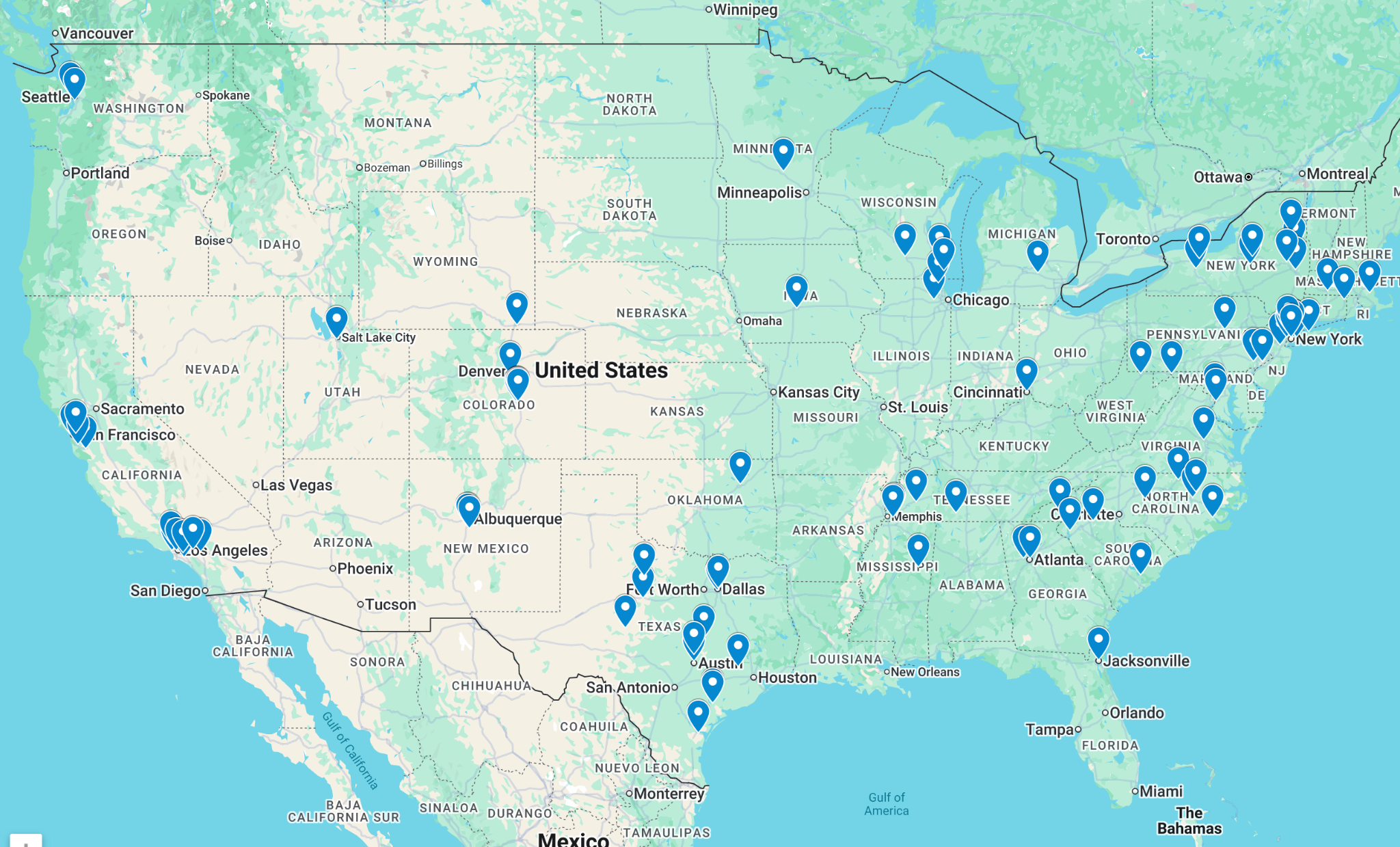 SimInsights’ active network of educational partners spans the United States, from K-12 districts to community colleges, CTE hubs, and civic organizations.
3. Pedagogical Alignment: Designing for the Realities of the Classroom
Immersive training cannot succeed in a vacuum; it must respect the operational realities of modern educators. Classrooms face strict constraints regarding instructional time, hardware limitations, and varying levels of technical literacy among staff. Technologists who lack deep, foundational roots in the education and training sector often build experiences that are structurally misaligned with classroom environments—either by making them too complex to manage within a standard class period or by failing to align them with recognized learning objectives.
Designing effective career-discovery simulations requires comprehensive educational expertise. From data center technician pathways to cleanroom protocols and maritime safety, experiences must be structured with intuitive user onboarding, robust backend analytics for teacher oversight, and modular designs that complement existing STEM or CTE curricula. When immersive technology is grounded in proven educational methodology, it ceases to be a novelty and becomes a legitimate tool for systemic workforce recruitment.
Looking Ahead
Connecting industry-level technical careers with next-generation learners is a complex, multi-faceted challenge requiring robust software architecture, institutional trust, and pedagogical precision.
We are deeply grateful to our customers and institutional partners for trusting us to build, host, and scale these vital educational pipelines. By validating our platform capabilities and utilizing our national network of classrooms, they are allowing us to fundamentally transform how tomorrow’s workforce discovers and trains for critical careers.
We are proud of the network we have built together—and we are just getting started.
About HyperSkill
HyperSkill is a no-code 3D simulation platform for both Virtual and Augmented Reality. HyperSkill was created to enable instructional designers to create immersive training content without having to learn programming. HyperSkill includes thousands of 3D assets and simulations that are accessible for free to users.
About SimInsights
SimInsights’ mission is to democratize the creation of 3D, interactive, immersive, and intelligent (I^3) simulations. We believe that simulations are the most impactful way to learn, yet few people can actually leverage them as a creative medium. SimInsights offers HyperSkill, a no-code tool to enable everyone to capture their knowledge in the form of 3D immersive, AI-powered simulations and share it with others.